
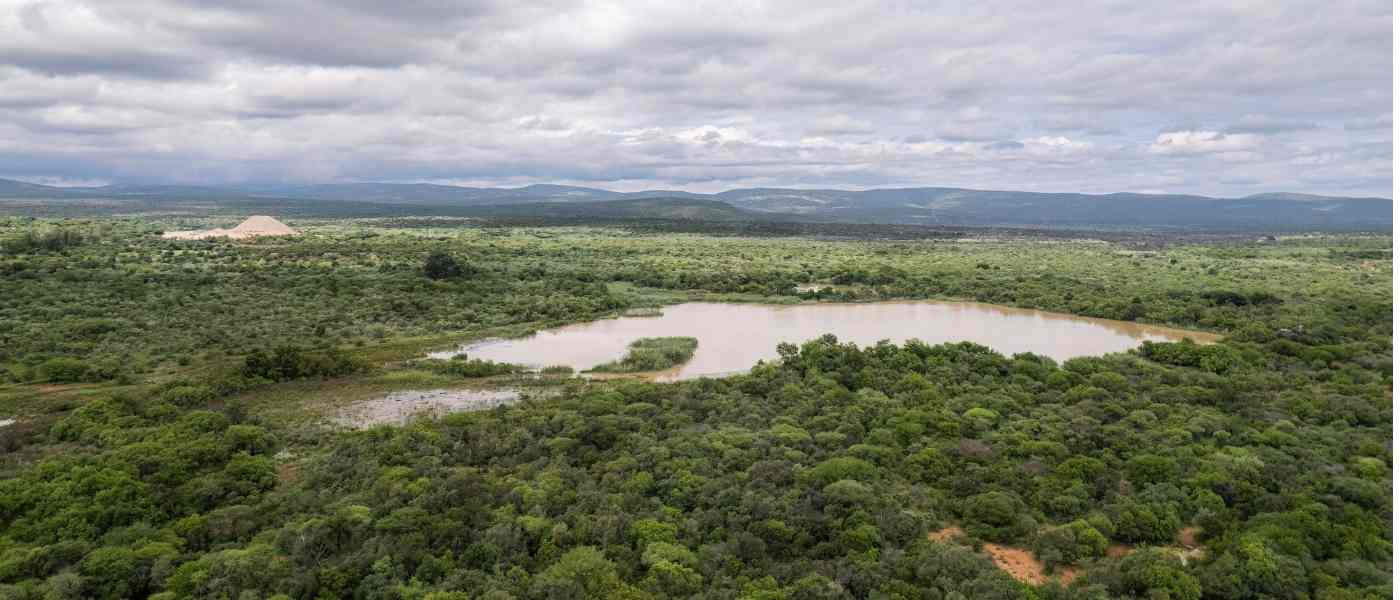
Long before Babirwa became associated with wildlife corridors and conservation, another story lay beneath its soil. Tin. Not scattered loosely across the veld, but locked into ancient fractures of the Bushveld Complex, one of the world’s great geological formations.
Rooiberg’s tin field, positioned within this mineral-rich terrain, became one of South Africa’s most significant tin-producing regions. The metal never carried the glamour of gold nor the strategic dominance of platinum, yet for decades it sustained a town, shaped identities, and drew men into the depths of the earth.
The story of tin in this valley predates industrial mining. Archaeological evidence indicates that indigenous communities were extracting and smelting cassiterite in the Rooiberg valley as early as the eleventh and twelfth centuries. Slag heaps and furnace remains discovered in the area point to organised metallurgical activity long before European prospectors arrived. Tin was alloyed with copper to produce bronze, a material that moved through regional trade networks linking southern Africa to the broader Indian Ocean world.
Long before shafts and headgear marked the skyline, this valley was already part of a sophisticated technological system grounded in African knowledge and trade.
Modern commercial mining began in the early twentieth century, following renewed prospecting in the early 1900s and the formal registration of the Rooiberg Minerals Development Company in 1908. The growth of industrial mining during this period was driven by several converging forces. Global demand for tin rose sharply, particularly for use in solder, plating and alloys during rapid industrialisation. The two World Wars further accelerated demand, as tin became essential in military and manufacturing applications. Improved geological surveying, rail infrastructure and capital investment made deeper, more systematic extraction possible. What had once been surface workings evolved into organised underground operations.
By the second half of the twentieth century, particularly from the 1950s through the 1980s, Rooiberg had developed into a structured mining complex. What came to be known simply as Rooiberg Mine was in fact A Mine, the operational hub. Twelve kilometres towards Bela-Bela, formerly Warmbaths, operated B Mine. Further south, at Leeuwpoort, C Mine extended the underground reach of the tin field. Across these sites, seven shafts penetrated the rock, linking ore bodies to processing plants and smelters.
Mining here was precise and demanding. Cassiterite, the dense tin oxide mineral, had to be drilled, blasted, hauled and crushed before concentration and smelting. It was underground work, following narrow, sometimes unpredictable veins through hard rock. Above ground, processing plants and smelters completed the chain from ore to metal.
Yet the organisation of the mine mirrored the broader structures of twentieth-century South Africa. Rooiberg operated within the racially stratified labour system that defined the era. White employees, including managers and skilled technical staff, lived in the established town area. Black workers, who formed the majority of the underground labour force and carried out most of the physically demanding tasks, were housed separately, typically in compounds or designated residential zones. Their roles were largely categorised as unskilled within the formal hierarchy of the time.
Oom Koos Engelbrecht, who arrived in Rooiberg in 1967 as paymaster at A Mine, recalls with warmth the mine managers he worked alongside and the sense of discipline and camaraderie within that circle. His memories are anchored in the world he inhabited. Alongside this, however, the mine’s broader workforce operated under more constrained conditions. Historical accounts record that black workers at Rooiberg sought improved wages and working conditions, and in the late 1980s and early 1990s the mine experienced labour disputes, including organised “go-slow” actions over pay. These tensions formed part of the mine’s closing decade, reflecting national shifts in labour consciousness during South Africa’s political transition.
The social infrastructure built by the mine reflected the divisions of the time. The Rooiberg Golf Club, now situated on the Babirwa farm, was constructed and maintained by the mining company. It served as a recreational space primarily for white employees and visiting executives. Annual Gold Fields sporting gatherings brought together tennis, bowls, squash and golf, concluding with meals at the clubhouse. Black workers were not participants in these spaces under apartheid’s regulatory framework. Similarly, fishing competitions at the Top and Bottom Dams were organised within this segregated system.
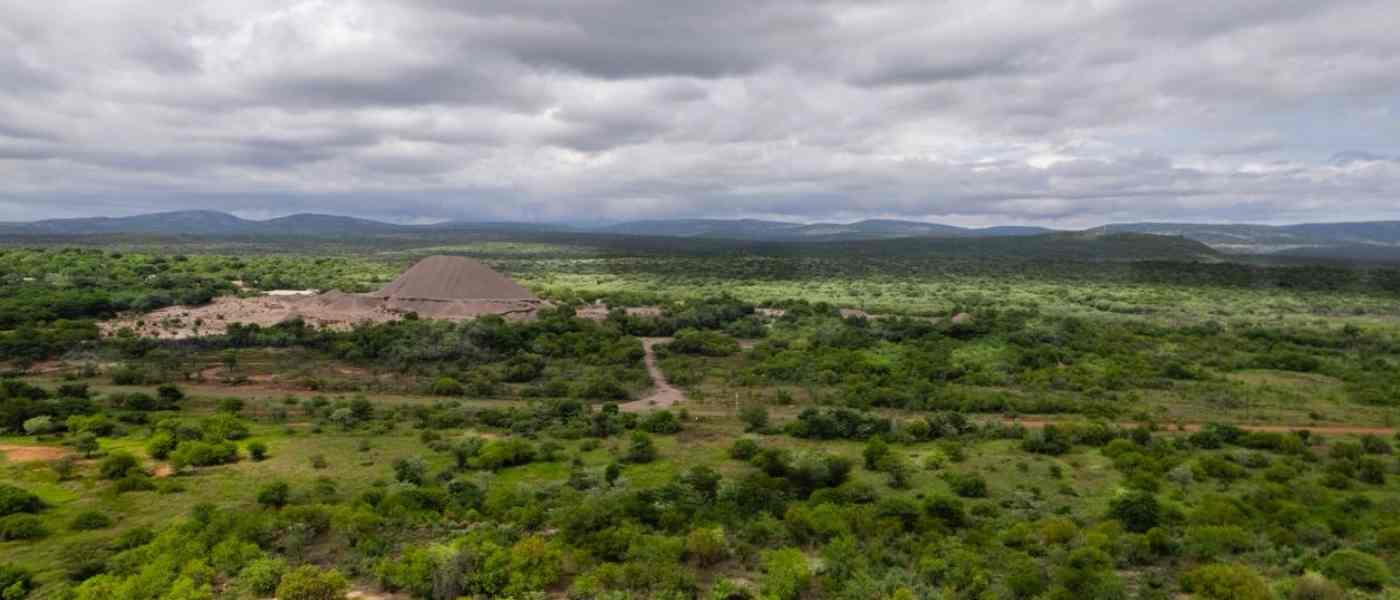
The physical imprint of the mine remains visible. From the Babirwa farm, one can still see the pale rise of the main waste dump against the bushveld skyline. Begun in 1969, it accumulated steadily as ore was processed and discarded rock deposited. After closure, portions of the dump were removed and repurposed in Pretoria as construction aggregate, yet some of it still stands, a visible marker of extraction.
The decisive shift came in 1992, when global tin prices fell sharply amid increased supply from the former Soviet Union and continued market instability following the collapse of the International Tin Council. Rooiberg A Mine became uneconomical and was closed. B Mine followed soon after. C Mine continued briefly, and for its final eighteen months Oom Koos Engelbrecht oversaw the smelters and plant before operations ceased entirely in 1994. Many employees were transferred to platinum operations; others dispersed into new forms of work. The end was described by those who experienced it as profoundly difficult.
Mining towns carry this particular melancholy. When shafts close, rhythms change. Houses are sold. Institutions dissolve or transform. After the mine’s closure, new formal housing developments were established near the former white town, reflecting South Africa’s post-1994 restructuring and the emergence of a predominantly Black residential community in the area.
The tin chapter of Rooiberg is therefore layered. It is geological and economic, but also social and human. It speaks of ancient African metallurgy and global industrial markets; of underground labour and volatile commodity cycles; of separation, and later, change.
Today, Babirwa occupies this inherited terrain. The waste dump remains visible from the farm, a reminder of an era when value was sought beneath the earth. The former mine golf course, now within Babirwa’s boundaries, is maintained and active, welcoming visitors without the restrictions that once defined it. Where access was previously limited, it is now shared.
Tin mining demanded descent, a search for material wealth below the surface. It unfolded within a society structured by division. The present custodianship of Babirwa moves in another direction, seeking not extraction but restoration, not separation but connection. The lion, emblem of the Babirwa name, replaces the shaft as central image. The land remains the same; its meaning continues to evolve.